
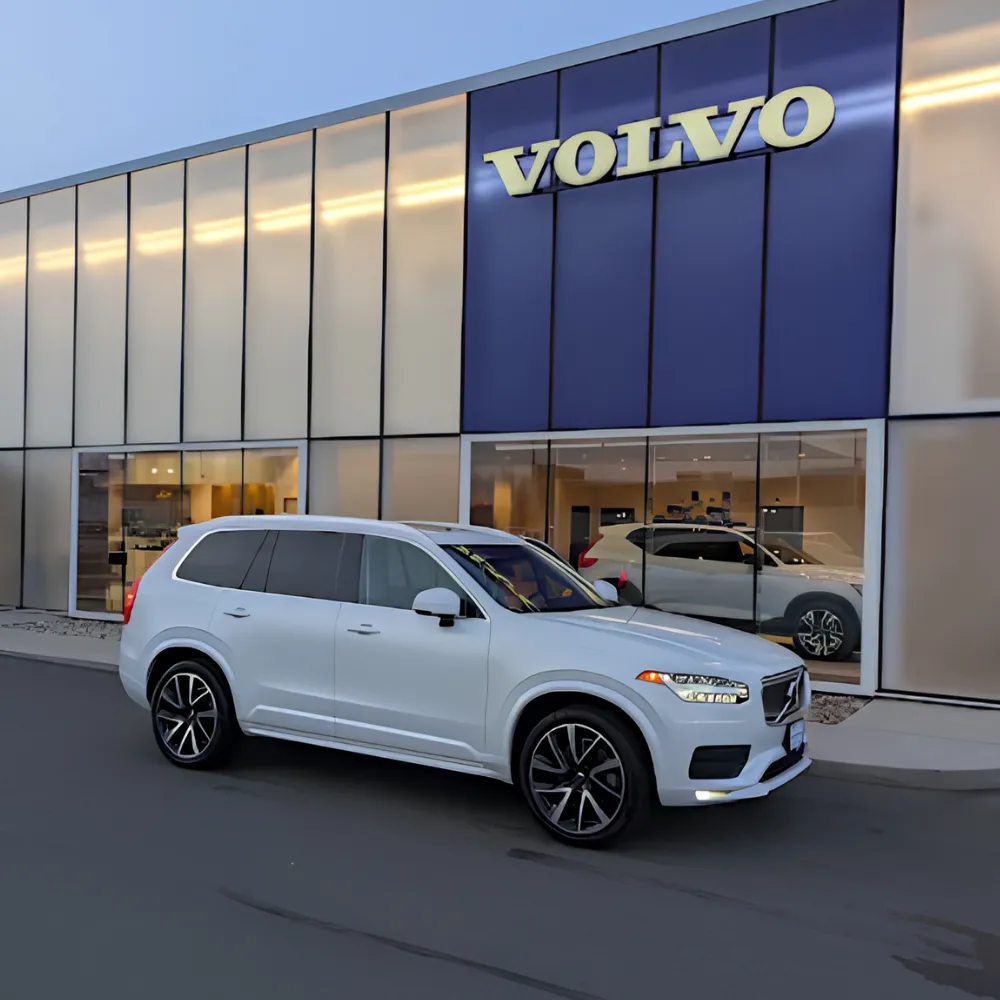
A Volvo lease may fit your monthly budget while costing more than the advertisement suggests. Cash due at signing, mileage limits, taxes, and return charges all affect how much you actually spend.
When comparing Volvo lease deals in CT, request a written quote for the exact vehicle. Gengras Volvo Cars East Hartford offers current specials and financing assistance, but the figures that matter are those tied to your eligibility and planned driving.
Understand What You Are Paying For
Leasing generally lets you use a Volvo for an agreed term and mileage allowance rather than purchase it outright. Your payments reflect the vehicle's agreed value, estimated depreciation, financing charges, and applicable taxes or fees.
Ask the dealership to explain the adjusted capitalized cost, residual value, and rent charge. Capitalized cost represents the amount used in the lease calculation, which may include certain financed fees. A capitalized cost reduction, such as cash down or eligible trade equity, lowers that amount.
Ask whether the finance charge is expressed through a money factor and how that figure affects the quoted payment. Request the required lease disclosures and review the calculation rather than relying solely on a verbal summary. Verify any acquisition fee that has been included in the capitalized cost.
The residual value estimates what the vehicle will be worth at lease end. It is not automatically the purchase price you would pay today. Confirm each figure in the proposed contract.
Compare the Same Volvo and Lease Terms
Start with new Volvo inventory and save the vehicle identification number, model year, trim, and equipment. An XC40 and XC90 may have very different prices and insurance expenses, while two XC60s can differ in powertrain or packages.
Use the Volvo model showroom for general model research, then confirm availability and the exact equipment on your shortlist.
Compare quotes using the same term, annual mileage, and amount paid upfront. Otherwise, a lower payment may simply represent a different agreement rather than a better offer.
Break Down Cash Due at Signing
Ask for an itemized signing amount that identifies the first monthly payment, any capitalized cost reduction, acquisition charge, registration, taxes, dealer fees, and refundable security deposit if applicable.
Zero down does not necessarily mean zero due at signing. Similarly, a larger down payment can reduce the monthly bill without reducing the full amount you contribute by the same proportion.
Mark whether the first payment is included. When totaling costs, count that payment either at signing or among future installments, never both.
If you put substantial cash down, ask what happens to that contribution if the leased vehicle is stolen or declared a total loss early in the term. Review the actual insurance and lease provisions before deciding.
Calculate Scheduled Costs With One Formula
Add nonrefundable money due at signing, all remaining scheduled payments, and predictable lease-end charges you expect to owe. Include trade equity used as a down payment because it has economic value, even though it is not cash withdrawn from your account.
Then divide your total by the number of months to calculate an effective monthly comparison figure. This is a budgeting measure, not the contractual payment.
A Hypothetical 36-Month Lease
Imagine $3,500 due at signing, including the first $500 payment, followed by 35 additional payments of $500. Assume a $400 disposition fee if you return the vehicle, with no refundable deposit or other required charges.
Here is how the total cost breaks down:
-
Due at signing: $3,500, including the first monthly payment.
-
Remaining monthly payments: 35 payments of $500, totaling $17,500.
-
Assumed return fee: $400 at the end of the lease.
-
Total scheduled lease cost: $21,400 over 36 months.
-
Average monthly cost: Approximately $594.44 when the scheduled costs are spread across the lease term.
The advertised $500 payment becomes about $594 per month when these costs are spread across the term. These hypothetical numbers are not a Gengras Volvo offer, and unexpected wear, mileage, taxes, or repairs could raise the final amount.
Estimate Mileage Before Choosing an Allowance
Use your recent odometer readings to estimate commuting, school runs, weekend travel, and holiday trips. Multiply your realistic yearly mileage by the proposed lease term rather than relying on a rough guess.
Ask for written comparisons at different mileage allowances. Check the per-mile charge for exceeding your total allotment. For example, 2,000 extra miles at a hypothetical $0.25 per mile would mean a $500 charge.
If your driving pattern may change, ask whether mileage can be adjusted and what conditions apply. Do not assume unused miles create a refund.
Check Incentives, Trade Value, and Taxes
Gengras Volvo offers Volvo retail programs for certain eligible customers. Ask which lease incentives apply to your specific VIN, whether they can be combined, and when the offer expires.
If trading a vehicle, use the dealership's trade valuation resource as a starting point. Request the final appraised amount, any loan payoff, and the equity applied to your lease as separate figures. Negative equity added to the contract can increase your obligation.
For Connecticut registration, ask how sales tax, registration charges, and motor vehicle property taxes will be handled. Local property tax may be passed through by the lessor, sometimes separately from monthly lease payments. Confirm actual responsibilities in the contract rather than assuming everything is included.
Budget Beyond the Lease Payment
Get an insurance quote for the exact Volvo and verify the leasing company's coverage requirements. Estimate fuel or charging, tires, maintenance, and any home charger installation.
The dealership's Volvo service center can help explain maintenance intervals, but request written confirmation of what any included service plan covers. Wear items and damage may remain your responsibility.
For a plug-in hybrid or electric Volvo, consider colder-weather range and charging convenience before deciding that lower fuel use will offset other costs.
Ask About Every Lease-End Path
Request the excess-wear standards, return-inspection procedures, disposition fee, and rules for missing equipment. Ask whether an inspection can be scheduled early enough to address issues.
If you may purchase the Volvo, ask for the contractual purchase option price plus applicable fees, taxes, and registration. Buying and returning are distinct scenarios, so calculate each separately.
Ask what early termination could cost and whether transferring the lease is permitted. These terms matter if you move, change jobs, or no longer need the vehicle.
Use This Five-Step Comparison Checklist
-
Select matching vehicles and confirm their availability, equipment, and lease term.
-
Request written figures for signing costs, payments, taxes, incentives, and mileage.
-
Add scheduled payments and expected return fees without double-counting the first payment.
-
Build a separate budget for insurance, energy, maintenance, and possible wear charges.
-
Compare the final agreement with your quote and keep copies of every document.
Frequently Asked Questions
Is the Lowest Payment Always the Best Deal?
No. Compare due-at-signing amounts, mileage, term, taxes, and return fees. A lower monthly payment can hide a higher total commitment.
Does Leasing Include All Maintenance?
Not automatically. Ask which services are included, the coverage period, and what you must pay for wear items or repairs.
Can Lease Terms Change After an Advertisement?
Yes. Vehicle availability, credit approval, incentive eligibility, and offer dates can affect the final quote. Review the actual written agreement before signing.
Compare Your Volvo Lease With Confidence
Make your Volvo lease deals in CT comparison about total cost, not a single advertised figure. Contact Gengras Volvo Cars East Hartford to discuss available vehicles, request itemized lease terms, and choose an arrangement that fits your driving and budget.
Categories:
Volvo Features, Volvo Maintenance, Gengras Volvo East Harford, Volvo Cars, Leasing, Finance, New Inventory, Service, Parts